Acknowledgement: I have been fortunate to meet people from all walks of life during this project. In particular, I want to extend my gratitude to those in positions of power who demonstrated a genuine care for art beyond institutional walls. Their support was an unexpected gift that has contributed to a deeper understanding of how the public space integrates a dialogue in support of underrepresented artists. The opposite has also been a finding. I have benefited from interacting with the public, every interaction has influenced my work.
Across The Street examines the structural exclusion experienced by a majority of underrepresented and minority artists who work outside established networks of visibility and institutional support.
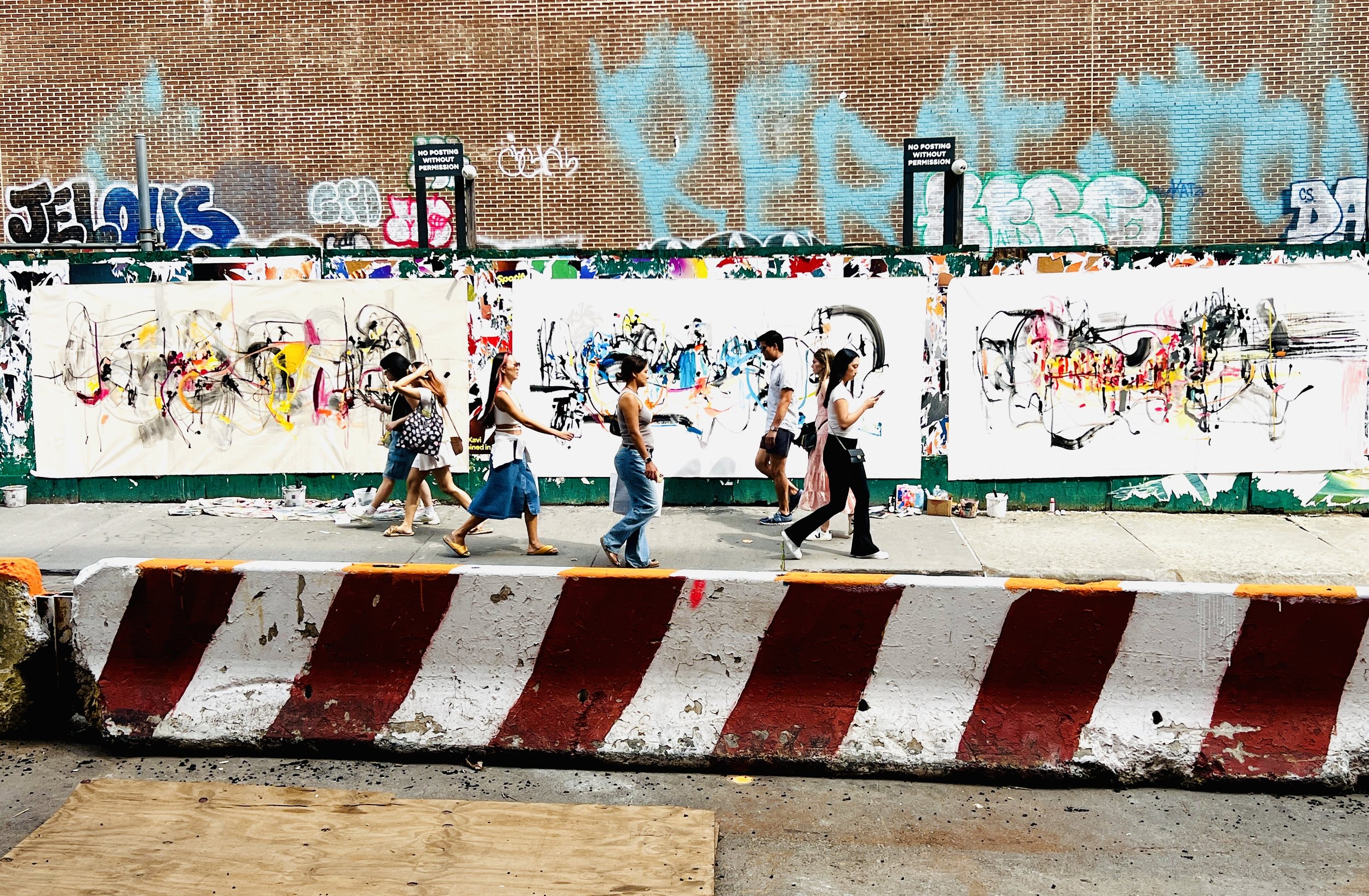
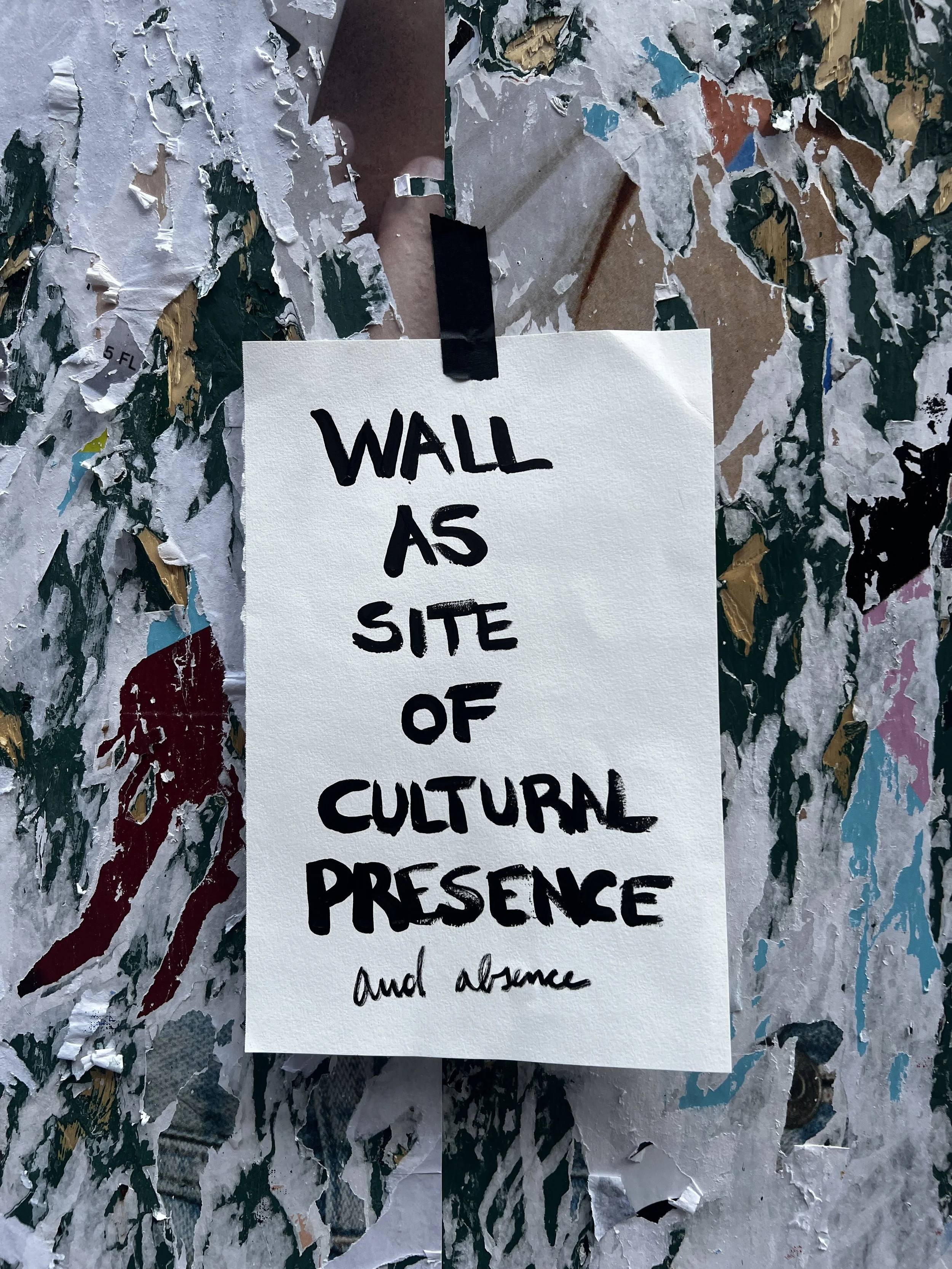
I create public interventions that incorporate painting and curating my presence in the public space of SoHo. I have been there for the past six years, with this year possibly being the one where my active presence will shift into an investigation of how what we regard as routine and mundane shifts into absence.
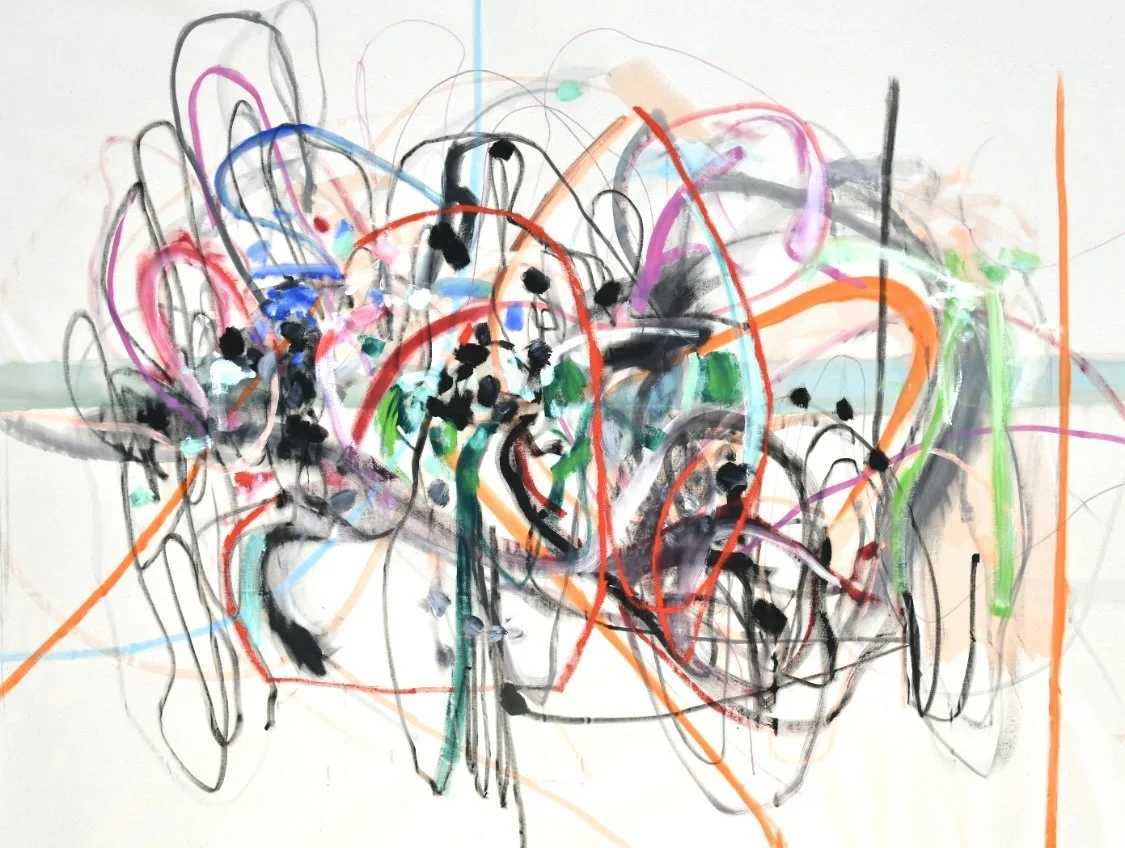
My abstract public work creates a space for encounter and reflection, inviting diverse audiences to engage with art outside of traditional institutional settings. I have been fortunate to experience that this project has also proven that important patrons and elites have looked past the street and shown interest in my work. They have also proven that they sometimes too, agree that the street is a place where culture and dialogue begin.
In parallel, my figurative work centers on the experiences of immigrants, highlighting the cultural knowledge, resilience, and human connections they contribute to the societies they join. Rather than focusing on migration solely through displacement or loss, I seek to reveal its capacity to enrich communities and expand shared cultural narratives.
As an independent artist, I am interested in giving form to stories that are frequently overlooked or over-simplified. My commitment to making visible perspectives that challenge singular histories and fixed identities, while embracing the complexity, plurality, and lived experiences that shape contemporary culture are at the center of my presence in the public space.
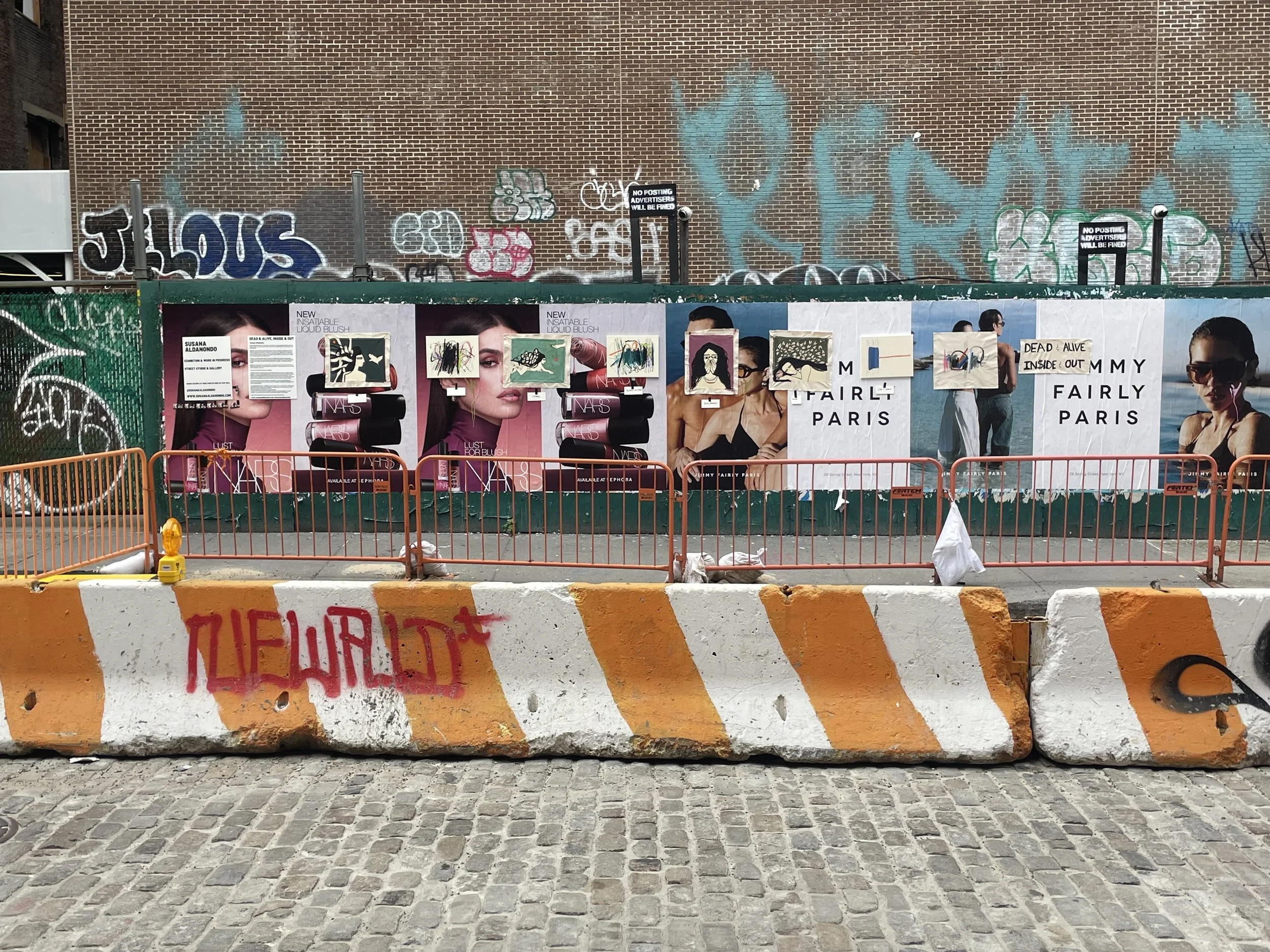
I create and curate my own presence on a wall in SoHo, New York. There, I curated a project I titled: “Across The Street.”
The title refers not only to a literal street but to the often invisible divide between those who have access to cultural power and those who remain outside of it, despite their physical and professional credentials and proximity.
The project addresses the reality that race, gender, finances and access play.
Most influential galleries, museums, collectors, and decision-makers may be only “across the street,” yet many artists continue to be overlooked because society shapes how they relate to the networks that shape recognition and opportunity as well as to what art is and how context shapes value.
The distance is or is not only physical but systemic. By presenting work in the public space, I bypass conventional gatekeepers and create an alternative site of visibility and dialogue.
The divide exists also in the prejudice by much of the public, assigning value based on place, so my presence here also seeks to educate the public, the budding collector who assumes work where I display my work should be cheap. I’m here to redirect them to their own prejudice and assumptions and entertain briefly guiding them to understand what makes a work of art or an artist valuable.
I used the study conducted by Marina Abramovic in her performative investigation: “Role Exchange.” Abramović’s Role Exchange gives evidence for arguing that people’s perception of value can be socially constructed and influenced by place, and their own perceptions.
Abramović exposes how much our judgement depends on context and place rather than the individual themselves.
Her evidence supports a dialogue for arguing that people’s perception of value can be socially constructed and influenced by place.
Abramović exposes how much our judgement depends on context and place rather than the individual themselves.
I see a contrasting parallel in Marina Abramović’s “Role Exchange”, in which she exchanged places with a prostitute in Amsterdam. By moving between the gallery and the Red Light District, Abramović demonstrated how differently the same person could be perceived and treated according to the place they occupied. The individuals had not changed, but the perception of their value had. This exposes how prejudice works and how it can become attached to place and then mistakenly transferred onto a person or artwork.
My presence here attempts to prove that place doesn’t confer value. Achieving that, takes educating the public I come into contact with.
Across the Street questions who is seen, who is ignored, and how cultural value is constructed. It proposes the street as a democratic space where art can meet audiences directly, while exposing the invisible barriers that continue to determine whose work enters the canon and whose remains unseen. My research concludes that ethnicity, gender, and socio-economic factors play a crucial role.
My work celebrates the plethora of voices left out, through highlighting how the concept of art and culture must materialize to intervene to bridge those gaps through art, music, and all art forms.
Across The Street highlights that often times those who are left out, discriminated, labeled, undervalued, hold tremendous cultural significance and value.
My project challenges the public and the dominant forces to reconsider what and who they hold valuable, while asking them to examine how they arrive at those decisions. It challenges a system based on relationships rather than on effort and meaning of the work of art. I seek to expose how challenging, unfair, rotten and risky it is to approach the arts based on networks of power and appearances.
Often times what’s outside of those dynamics is embedded with character, effort and authenticity that no powerful network can compare to.